The Hidden Connection Between Your Cooking Oil and Omega-3 Benefits


In recent years, more people have become aware of the importance of Omega-3 fatty acids for heart health, brain function, immunity, and overall wellness. From taking an Omega 3 Supplement to adding Flaxseed and Flaxseed Oil to daily diets, consumers are actively searching for better ways to support long-term health.
However, there is one critical factor that often goes unnoticed: the cooking oil used every day in the kitchen.
Many people invest in premium supplements, superfoods, and healthy foods while continuing to cook with highly refined oils that may contribute to nutritional imbalance. The truth is that your cooking oil can either support or undermine the benefits of Omega-3 fatty acids.
At oRegion, we believe understanding the relationship between cooking oils and Omega-3 nutrition is essential for making smarter dietary choices. Whether you use Cold Pressed Mustard Oil, Cold Pressed Groundnut Oil, Cold Pressed Sesame Oil, or Cold Pressed Flaxseed Oil, choosing the right oil can significantly influence your overall health.
Let's explore the hidden connection between cooking oils and Omega-3 benefits and discover why nutrition experts are paying closer attention to this topic than ever before.
Read More:- Can Omega-3 Reduce High Blood Pressure?
Why Your Cooking Oil Matters More Than Most People Realize in 2026
Consumers today are increasingly focused on health optimization. Searches for cold pressed oil, cold pressed mustard oil, cold pressed flaxseed oil, best cold pressed oil in India, and wood pressed oil continue to grow as people become more conscious of ingredient quality.
While much attention is given to vitamins, supplements, and protein intake, the quality of dietary fats often receives less consideration.
The oil used in daily cooking influences:
Nutrient absorption
Inflammation levels
Hormonal balance
Cardiovascular health
Cellular function
Metabolic wellness
Nutrition researchers now recognize that cooking oils are not simply a medium for cooking. They are a major contributor to overall dietary fat quality.
For example, using traditional oils like Kacchi Ghani Sarso Tel, Cold Pressed Sesame Seed Oil, or Groundnut Cold Pressed Oil can offer a more natural nutritional profile compared to heavily refined alternatives.
The growing popularity of cold pressed oil online purchases reflects a shift toward minimally processed foods and healthier cooking practices.
Read More:- What Happens When You Take Omega-3 Daily?
Can the Wrong Cooking Oil Reduce Omega-3 Benefits?
The Short Answer
Yes.
Excessive consumption of refined Omega-6-rich oils combined with frequent exposure to overheated cooking oils may reduce the effectiveness of Omega-3 fatty acids in the body.
When dietary Omega-6 intake significantly outweighs Omega-3 intake, the body's metabolic pathways can become imbalanced. This imbalance may influence inflammation, cardiovascular health, and overall wellness.
Additionally, heating oils beyond their stability limits can trigger oxidation, damaging beneficial fatty acids and reducing nutritional value.
In simple terms, taking Omega-3 supplements while regularly consuming unstable or heavily processed oils may limit some of the benefits you are trying to achieve.
Read More:- Convert Land to Organic Farming | Healthy Foods
Why This Matters for Indian Families
Indian households use cooking oil every day.
Whether preparing rotis, curries, sabzis, snacks, or traditional dishes, cooking oil becomes a consistent part of the diet.
Choosing oils based on:
Cooking method
Heat requirements
Nutritional composition
Fatty acid profile
can help support long-term heart health and metabolic wellness.
A thoughtful approach that includes Cold Pressed Mustard Oil, Cold Pressed Groundnut Oil, and Cold Pressed Sesame Oil, alongside raw sources of Omega-3 such as Cold Pressed Flaxseed Oil, may offer a more balanced dietary strategy.
Read More:- Are Processed Oils Linked to Lifestyle Diseases?
Understanding Omega-3 Fatty Acids and Why Your Body Needs Them
What Are Omega-3 Fatty Acids?
Omega-3 fatty acids are essential fats that the human body cannot produce in sufficient amounts on its own.
Because they are essential nutrients, they must be obtained through food or supplements.
Read More:- Flaxseed Oil for Knee Pain & Joint Health
ALA (Alpha-Linolenic Acid)
ALA is the primary plant-based Omega-3 fatty acid.
It is naturally found in:
Flaxseed
Chia seeds
Walnuts
Flaxseed oil
Cold Pressed Flax Oil
Virgin Flaxseed Oil
The oil extracted from the flax crop is often referred to as:
Oil from flax
Alsi Seeds Oil
Alsi Ka Tel
Alsi Tel
Among plant-based sources, Cold Pressed Flaxseed Oil is considered one of the richest natural sources of ALA.
Read More:- Flaxseed Oil Awareness & Benefits in India
EPA and DHA
EPA (Eicosapentaenoic Acid) and DHA (Docosahexaenoic Acid) are longer-chain Omega-3 fatty acids associated with:
Brain function
Eye health
Heart health
Cognitive performance
The body can convert ALA from Omega-3 Vegan Flaxseed Oil into EPA and DHA, although the conversion rate is relatively limited.
This is why consistent intake of ALA-rich foods remains important.
Read More:- Are Cooking Oils “Hot” or “Cold”?
Major Health Benefits of Omega-3
Heart Health Support
Omega-3 fatty acids have been widely studied for their role in supporting cardiovascular wellness.
They may help maintain:
Healthy blood lipid levels
Healthy circulation
Normal blood vessel function
Brain Function and Cognitive Performance
The brain contains significant amounts of healthy fats.
Omega-3s contribute to:
Memory function
Learning capacity
Cognitive performance
Eye Health and Vision Protection
DHA is a major structural component of the retina. Adequate Omega-3 intake may help support long-term eye health.
Read More:- Why the Government Is Promoting Natural Foods
Joint Mobility and Inflammation Management
Omega-3 fatty acids are known for their role in helping maintain a healthy inflammatory response.
This may support:
Joint comfort
Mobility
Active lifestyles
Hormonal Balance and Cellular Health
Healthy fats play an essential role in hormone production and cellular communication.
Regular intake of Omega-3-rich foods such as Best Cold Pressed Flaxseed Oil may support overall cellular wellness.
Read More:- Why Does Oil Look Cloudy at the Bottom
Immune System Support
Balanced fatty acid intake contributes to healthy immune function and helps maintain normal physiological responses throughout the body.
The Omega-3 and Omega-6 Balance Most Diets Are Missing
How Human Diets Have Changed Over Time
Traditional diets contained a more balanced ratio of Omega-3 and Omega-6 fatty acids.
Modern dietary patterns have shifted dramatically.
The increased use of processed foods and refined vegetable oils has led to significantly higher Omega-6 consumption.
This shift has altered the balance many nutrition experts believe is important for optimal health.
Read More:- Should You Refrigerate Flaxseed Oil?
Common Sources of Excess Omega-6
Soybean Oil
Widely used in processed foods and commercial cooking.
Corn Oil
Common in packaged foods and industrial food production.
Cottonseed Oil
Frequently found in snacks and processed food products.
Refined Sunflower Oil
Often marketed as healthy, but it can contribute to substantial Omega-6 intake when consumed excessively.
Generic Vegetable Oil Blends
Many commercial blends contain refined oils with high Omega-6 concentrations.
Why Too Much Omega-6 Can Be a Problem
Competition for Metabolic Pathways
Omega-3 and Omega-6 fatty acids share similar enzymatic pathways. When Omega-6 intake becomes excessive, Omega-3 utilization may become less efficient.
Reduced Omega-3 Utilization
Even individuals taking an Omega-3 supplement may not experience optimal benefits if their dietary fat balance remains heavily skewed toward Omega-6 fats.
Read More:- Why Some Oils Are Hot and Others Are Not
Increased Inflammatory Responses
Inflammation is a natural biological process.
However, long-term imbalance between Omega-3 and Omega-6 intake may contribute to less favorable inflammatory regulation.
The Hidden Nutritional Conflict: Taking Omega-3 Supplements While Using the Wrong Oil
Why Supplementation Alone May Not Be Enough
Many consumers purchase Omega-3 supplements expecting significant health improvements.
However, supplementation represents only one part of the nutritional equation.
If daily meals are consistently prepared using highly refined oils, the overall fatty acid profile of the diet may remain imbalanced.
This creates a hidden nutritional conflict.
People often focus on adding healthy nutrients without addressing factors that may work against them.
Read More:- Why Pet Owners Tested Flaxseed Oil on Dogs
How Cooking Oils Influence Fatty Acid Metabolism
The body does not evaluate nutrients in isolation.
Instead, nutrients interact continuously.
This concept is often called nutrient synergy.
The quality of dietary fats influences:
Nutrient absorption
Hormone production
Cell membrane structure
Metabolic function
This is why choosing quality oils such as:
Cold Pressed Mustard Oil
Mustard Seed Oil Cold Pressed
Groundnut Oil Pure
Organic Cold Pressed Groundnut Oil
Cold Pressed Sesame Oil
Gingelly Oil
Til Oil
Cold Pressed Flaxseed Oil
can play an important role in supporting overall dietary quality.
Signs Your Diet May Have an Omega-6 Overload
Frequent Inflammation
Persistent inflammatory discomfort may indicate an imbalance in dietary fat quality.
Brain Fog
Some individuals report reduced mental clarity when dietary quality declines.
Joint Stiffness
Fatty acid imbalance may affect comfort and mobility over time.
Slower Exercise Recovery
Recovery processes depend on adequate nutrition, including healthy fat intake.
Cardiovascular Concerns
Maintaining a balanced dietary fat profile remains an important component of heart-health-focused nutrition.
What Happens When Cooking Oil Is Heated Beyond Its Limits?
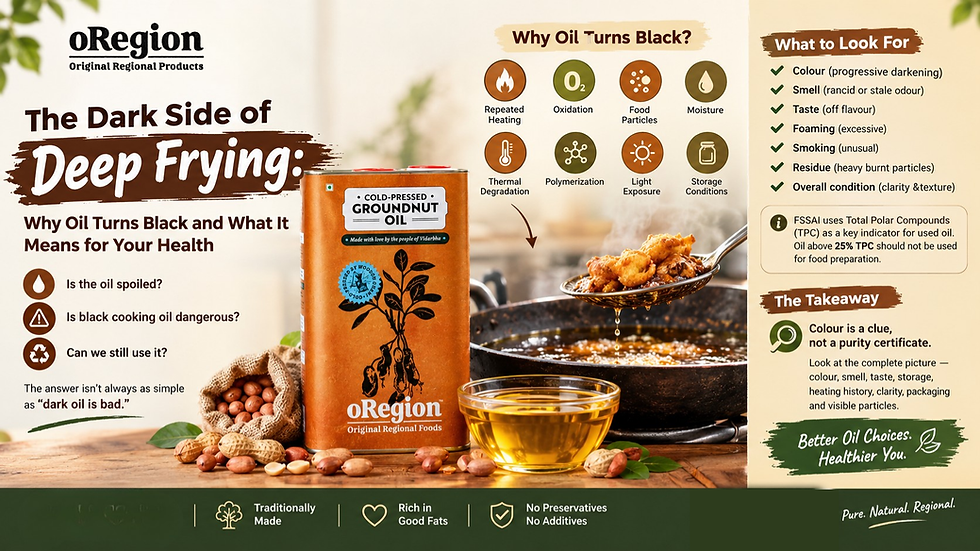
Many people choose healthy oils, but unknowingly damage their nutritional value through improper cooking practices. Understanding how heat affects cooking oils is essential if we want to maximize Omega-3 benefits and maintain overall dietary quality.
Understanding Smoke Point
The smoke point is the temperature at which an oil begins to break down and produce visible smoke.
When an oil reaches or exceeds its smoke point:
Beneficial compounds start degrading
Flavor changes occur
Nutritional quality decreases
Harmful oxidation products can form
However, smoke point alone should not determine oil quality. The overall stability of the fatty acids within the oil is equally important.
What Happens During Oil Oxidation?
Oxidation occurs when fats react with oxygen, especially under high heat.
Breakdown of Fatty Acids
The delicate fatty acids found in many oils begin to degrade when exposed to excessive temperatures.
Loss of Nutritional Value
Beneficial nutrients, antioxidants, and natural compounds may be reduced during prolonged heating.
Formation of Free Radicals
Oxidized oils can generate unstable molecules known as free radicals that may contribute to oxidative stress within the body.
The Relationship Between Oxidized Oils and Chronic Disease
Oxidative Stress
Oxidative stress occurs when free radicals exceed the body's antioxidant defenses.
Cellular Damage
Over time, oxidative stress may affect healthy cellular function.
Accelerated Aging
Research increasingly links oxidative damage to various aging-related processes.
Heart Disease Risk
Maintaining healthy dietary fat quality remains an important factor in supporting cardiovascular wellness.
Why Repeatedly Heated Oils May Be More Harmful Than You Think
One of the most overlooked nutrition issues is the repeated heating of cooking oils.
Common Sources of Reheated Oils
Commercial Frying
Many commercial kitchens reuse oils multiple times to reduce costs.
Street Food
Popular fried foods are often cooked in oil that has undergone repeated heating cycles.
Restaurant Cooking
Depending on preparation methods, oils may be used repeatedly throughout the day.
What Happens After Multiple Heating Cycles?
Increased Oxidation
Each heating cycle accelerates oil degradation.
Toxic Byproduct Formation
Repeated exposure to heat can create undesirable compounds.
Reduced Nutritional Quality
The longer oil is heated, the more nutrients it may lose.
Greater Cardiovascular Stress
Poor-quality dietary fats may negatively influence long-term heart health when consumed regularly.
Flaxseed Oil: The Richest Plant-Based Omega-3 Oil That Many People Use Incorrectly
Among all plant-based oils, few receive as much attention as flaxseed oil.
Unfortunately, many people misunderstand how to use it correctly.
What Is Flaxseed Oil?
Flaxseed oil is extracted from flax seeds, one of the oldest cultivated crops in human history.
The flax crop produces seeds naturally rich in Alpha-Linolenic Acid (ALA), a plant-based Omega-3 fatty acid.
Flaxseed oil is also commonly known as:
Oil from flax
Alsi Seeds Oil
Alsi Ka Tel
Alsi Tel
Virgin Flaxseed Oil
Cold Pressed Flax Oil
When produced using minimal processing, it becomes Cold Pressed Flaxseed Oil, preserving its natural nutritional profile.
Why Flaxseed Oil Is Considered a Vegan Omega-3 Powerhouse
Flaxseed Omega 3 Fatty Acids
Flaxseed oil contains one of the highest concentrations of plant-based Omega-3 fats available in nature.
Vegan Omega 3 Alternative
For vegetarians and vegans, flaxseed oil provides a valuable alternative to marine-based Omega-3 sources.
Omega 3 Rich Oil for Daily Nutrition
A small daily serving can contribute meaningful amounts of ALA to the diet.
This is why many consumers search for:
Vegan Omega 3
Omega 3 Vegan Flaxseed Oil
Best Cold Pressed Flaxseed Oil
Cold Pressed Flax Seed Oil
Cold Pressed Flaxseed Oil Benefits
Heart Health
Omega-3 fats help support cardiovascular wellness and healthy circulation.
Skin Health
Healthy fats contribute to maintaining skin hydration and elasticity.
Brain Function
The brain relies heavily on healthy fats for optimal performance.
Hormonal Wellness
Dietary fats play a critical role in hormone production and regulation.
Anti-Inflammatory Support
Omega-3 fatty acids help support a balanced inflammatory response.
These benefits explain the growing demand for oRegion Flaxseed Oil, Cold Pressed Flaxseed Oil Benefits, and Flaxseed Omega 3 products.
Flaxseed Oil Benefits for Female Health
Women often search specifically for information regarding flaxseed oil benefits for female health, and for good reason.
Flaxseed Oil and Hormonal Balance
Flaxseed contains naturally occurring lignans and healthy fats that may support hormonal wellness when included as part of a balanced diet.
Flaxseed Oil Benefits for Female Skin Health
The Omega-3 content found in flaxseed oil may help support:
Skin hydration
Healthy texture
Natural glow
Flaxseed Oil Benefits for Hair Health
Many women include flaxseed oil as part of beauty-focused nutrition routines because healthy fats contribute to overall hair wellness.
Flaxseed and Women's Nutritional Wellness
Women often require adequate healthy fat intake to support:
Hormonal health
Skin health
Energy metabolism
Cellular function
This is one reason searches for flaxseed benefits women, flax seed oil benefits for female, and flaxseed oil benefits for female continue to rise.
Flaxseed Oil Befemalesnefits for Men and Active Lifestyles
Flaxseed oil is equally beneficial for men and physically active individuals.
Cardiovascular Support
Heart health remains important regardless of age or activity level.
Recovery and Exercise Performance
Healthy fats contribute to recovery processes and overall nutritional balance.
Long-Term Wellness and Healthy Aging
Consistent intake of Omega-3-rich foods may support healthy aging and overall wellness.
Why Cold Pressed Flaxseed Oil Should Never Be Used for Frying
One of the biggest mistakes people make is using flaxseed oil for high-heat cooking.
Understanding the Low Smoke Point of Flaxseed Oil
Because flaxseed oil contains high amounts of delicate Omega-3 fatty acids, it is highly sensitive to heat.
What Happens to Omega-3 During High Heat Cooking?
When exposed to frying temperatures:
Omega-3 fats begin breaking down
Nutritional value decreases
Oxidation increases
Using flaxseed oil for frying defeats the primary reason people purchase it.
Best Ways to Use Flaxseed Oil
Salad Dressings
Add directly to fresh salads.
Smoothies
Blend into fruit or protein smoothies.
Yogurt
Mix into yogurt for an Omega-3 boost.
Wellness Shots
Combine with nutritious ingredients for daily wellness routines.
Cold Recipes
Use only in recipes that do not require heating.
How to Use Flaxseed Oil Correctly for Maximum Omega-3 Benefits
For best results:
Store in a cool, dark place
Avoid direct sunlight
Never use for deep frying
Consume fresh
Choose premium cold-pressed products
When used correctly, Cold Pressed Flaxseed Oil Benefits can be fully preserved.
Which Cooking Oils Are Best for Preserving Nutritional Value During Cooking?
Not all oils respond to heat in the same way.
Understanding Oil Stability
Saturated Fats
Generally more stable under heat.
Monounsaturated Fats
Offer a balance of stability and nutrition.
Polyunsaturated Fats
Provide important nutrients but are often more sensitive to oxidation.
Why Stability Matters More Than Marketing Claims
Many oils are marketed as healthy based on a single nutrient.
However, nutritional value depends on:
Processing methods
Fat composition
Freshness
Intended cooking application
This is why nutrition experts increasingly recommend choosing different oils for different purposes rather than relying on a single oil for every situation.
Cold Pressed Mustard Oil: India's Traditional Cooking Oil Making a Strong Comeback
For generations, Indian households have trusted Sarso Tel, Kacchi Ghani Sarso Tel, and Cold Pressed Mustard Oil for everyday cooking.
Today, modern nutrition science is rediscovering many of the reasons traditional communities valued this oil.
What Makes Cold Pressed Mustard Oil Different?
Unlike heavily refined alternatives, Cold Pressed Kachi Ghani Mustard Oil is extracted using low-temperature mechanical methods.
This helps preserve:
Natural flavor compounds
Antioxidants
Beneficial fatty acids
Traditional aroma
Benefits of Cold Pressed Mustard Oil
Heart-Friendly Fatty Acids
Mustard oil contains a favorable balance of fats that can fit into a heart-conscious diet.
Natural Antioxidants
Cold pressing helps retain naturally occurring antioxidant compounds.
Everyday Cooking Versatility
Suitable for many traditional Indian cooking methods.
Traditional Culinary Value
From pickles to curries, mustard oil remains deeply rooted in Indian food culture.
Mustard Oil Benefits Beyond Cooking
Mustard Oil Benefits for Skin
Traditional wellness practices have long used mustard oil to support skin care routines.
Mustard Oil for Hair Care
Many families continue using Mustard Oil for Hair because of its longstanding place in traditional hair-care practices.
Traditional Wellness Uses
Across generations, mustard oil has been used in massages and wellness rituals throughout India.
Why Cold Pressed Groundnut Oil Is a Smart Choice for Daily Cooking
Among traditional Indian cooking oils, Cold Pressed Groundnut Oil continues to be one of the most practical and versatile options for everyday use. Known for its pleasant flavor and cooking stability, it remains a preferred choice in many households.
Advantages of Groundnut Oil
Groundnut oil naturally contains a balance of monounsaturated and polyunsaturated fats, making it suitable for various cooking applications.
Some notable advantages include:
Pleasant nutty flavor
Good cooking stability
Traditional culinary acceptance
Versatile usage across cuisines
These qualities explain why consumers increasingly search for Groundnut Oil Pure, Ground Nut Oil for Cooking, and Best Groundnut Oil for Cooking.
Groundnut Oil Benefits for Indian Kitchens
Indian cooking often involves sautéing, roasting, shallow frying, and preparing spice-rich dishes.
Groundnut Cold Pressed Oil works particularly well for:
Daily vegetable preparations
Curries
Stir-fries
Traditional snacks
Regional recipes
Heat Stability and Nutritional Retention
Compared to more delicate oils, Cold Pressed Groundnut Oil for Cooking offers good stability during normal cooking temperatures.
When minimally processed, it can help retain naturally occurring nutrients while providing excellent cooking performance.
Best Uses of Cold Pressed Groundnut Oil
Everyday Indian cooking
Stir frying
Shallow frying
Tempering spices
Regional cuisine preparation
For consumers seeking a traditional option, oRegion Groundnut Oil offers a natural alternative to highly refined cooking oils.
Cold Pressed Sesame Oil: Ancient Nutrition Backed by Modern Wellness Trends
Few oils have such a long culinary and wellness history as Sesame Oil.
Known as Til Oil, Til Ka Tel, and Gingelly Oil, sesame oil has been used across Asian and Indian cultures for thousands of years.
What Makes Sesame Oil Unique?
Sesame seeds naturally contain antioxidants and beneficial plant compounds.
When processed using traditional methods, Cold Pressed Sesame Oil preserves many of these naturally occurring components.
Consumers searching for:
Cold Pressed Sesame Seed Oil
Sesame Oil
Til Oil
Til Ka Tel
Gingelly Oil
are often looking for both culinary and wellness benefits.
Cold Pressed Sesame Oil Benefits
Natural Antioxidants
Sesame oil naturally contains compounds that help support oxidative balance.
Heart Health Support
Its fatty acid profile makes it a valuable addition to a balanced diet.
Traditional Ayurvedic Uses
For centuries, sesame oil has been used in traditional wellness systems for both internal and external applications.
Sesame Oil for Hair and Skin Care
One reason Sesame Oil for Hair remains popular is its long history in beauty and wellness routines.
Traditionally, sesame oil has been used for:
Hair nourishment
Scalp massage
Skin moisturization
Traditional self-care practices
Modern consumers continue to appreciate these applications while also enjoying sesame oil as a flavorful cooking ingredient.
Best Oils for Different Cooking Methods: Expert Comparison Table
Cooking Oil Comparison Chart
Oil Type | Heat Stability | Omega-3 Preservation | Nutritional Value | Best Applications |
Cold Pressed Mustard Oil | High | Moderate | Excellent | Indian cooking, sautéing, curries |
Cold Pressed Groundnut Oil | High | Moderate | Excellent | Everyday cooking, frying, stir-frying |
Cold Pressed Sesame Oil | Moderate-High | Moderate | Excellent | Traditional recipes, flavor enhancement |
Cold Pressed Flaxseed Oil | Low | Excellent | Outstanding | Salads, smoothies, cold recipes |
Extra Virgin Olive Oil | Moderate | Moderate | Very Good | Salads, light cooking |
Refined Vegetable Oils | Variable | Low | Lower due to processing | General commercial cooking |
Key Takeaway
No single oil is perfect for every purpose.
The healthiest kitchens often use multiple oils strategically, depending on cooking methods and nutritional goals.
Are Cold Pressed Oils Better Than Refined Oils?
This is one of the most common questions consumers ask today.
What Is Cold Pressed Oil?
Many people search for:
What is Cold Pressed Oil?
Cold Pressed Oil Means
Cold Pressed Oil Benefits
Cold pressing refers to extracting oil mechanically without excessive heat or harsh chemical processing.
This approach helps preserve:
Natural nutrients
Antioxidants
Flavor compounds
Beneficial fatty acids
Cold Pressed Oil vs Refined Oil
Feature | Cold Pressed Oil | Refined Oil |
Processing | Minimal | Extensive |
Nutrient Retention | Higher | Lower |
Antioxidants | More Preserved | Often Reduced |
Flavor | Natural | Neutral |
Chemical Treatment | Minimal | May involve additional processing |
Cold Pressed Oil vs Wood Pressed Oil
Consumers often compare Cold Pressed Oil vs Wood Pressed Oil.
Both methods emphasize low-temperature extraction.
Wood pressed oil typically uses traditional wooden churners, while cold pressed oil generally refers to mechanical extraction under controlled temperatures.
Both approaches aim to preserve natural nutritional qualities.
Benefits of Cold Pressed Oil
Nutrient Preservation
Natural compounds remain better preserved.
Natural Antioxidants
Minimal processing helps maintain antioxidant content.
Better Flavor
Cold pressed oils often retain their characteristic aroma and taste.
Minimal Processing
Consumers seeking cleaner foods often prefer minimally processed oils.
How to Choose the Best Cooking Oil for Your Family
Selecting the right oil requires more than reading marketing claims.
Questions to Ask Before You Buy Cooking Oil
What cooking methods do we use most often?
Is the oil suitable for high heat?
Is it cold pressed?
How fresh is the oil?
Does the brand provide sourcing transparency?
Understanding Cold Pressed Oil Price vs Value
Many consumers focus solely on Cold Pressed Oil Price, Cold Pressed Flaxseed Oil Price, or Cold Pressed Mustard Oil Price.
However, value should also include:
Quality of seeds
Extraction method
Freshness
Nutrient retention
Packaging quality
What Makes Premium Oils Worth the Investment?
Premium oils often provide:
Better sourcing
Improved freshness
Minimal processing
Greater nutritional integrity
For health-conscious families, these factors can justify the investment.
Smart Multi-Oil Strategy Recommended by Nutrition Experts
Rather than relying on one oil, many experts recommend using multiple oils strategically.
Cold Pressed Mustard Oil for Indian Cooking
Ideal for:
Curries
Traditional dishes
Everyday cooking
Groundnut Oil for Daily Versatility
Excellent for:
General cooking
Stir frying
Shallow frying
Sesame Oil for Flavor and Wellness
Useful for:
Traditional recipes
Flavor enhancement
Wellness-focused applications
Flaxseed Oil for Raw Omega-3 Nutrition
Best used for:
Smoothies
Salad dressings
Yogurt
Wellness shots
This multi-oil strategy helps combine nutrition, flavor, and cooking performance.
What to Look for When Buying Authentic Cold Pressed Oil Online
As more consumers purchase Cold Pressed Oil Online, knowing how to identify quality products becomes increasingly important.
Signs of Genuine Cold Pressed Oil
Transparent Sourcing
Trustworthy brands openly discuss seed origin and production practices.
Fresh Production Batches
Fresh oil generally offers superior quality and flavor.
Dark Protective Packaging
Light exposure can accelerate oxidation.
Dark bottles help protect oil quality.
Quality Certifications
Reliable brands invest in quality control and testing.
Why More Consumers Are Choosing Premium Cold Pressed Oils
Modern consumers increasingly value:
Transparency
Traditional extraction
Better nutrition
Authentic ingredients
This trend continues to drive demand for premium cold pressed oils.
Why Health-Conscious Families Are Choosing oRegion Cold Pressed Oils
The oRegion Philosophy
At oRegion, we believe healthy cooking starts with honest ingredients and traditional extraction methods.
Our focus is on delivering oils that preserve the natural goodness of carefully selected seeds.
oRegion Cold Pressed Flaxseed Oil
Rich in plant-based Omega-3 fatty acids, oRegion Flaxseed Oil is designed for consumers seeking a natural Vegan Omega 3 source.
oRegion Cold Pressed Mustard Oil
Produced to preserve the traditional qualities associated with Cold Pressed Mustard Oil, Sarso Tel, and Kacchi Ghani Sarso Tel.
oRegion Cold Pressed Groundnut Oil
A versatile cooking oil suitable for everyday Indian kitchens.
oRegion Cold Pressed Sesame Oil
Prepared using traditional principles to retain the authentic qualities of Gingelly Oil, Til Oil, and Cold Pressed Sesame Oil.
Quality, Freshness, and Traditional Extraction Methods
Every oil is selected and processed with attention to:
Quality
Freshness
Purity
Nutritional integrity
Frequently Asked Questions About Cooking Oils and Omega-3
Does Cooking Destroy Omega-3 Fatty Acids?
Excessive heat can damage delicate Omega-3 fats. This is why Cold Pressed Flaxseed Oil is generally recommended for raw consumption.
Which Oil Contains the Highest Plant-Based Omega-3?
Flaxseed oil is widely regarded as one of the richest plant-based Omega-3 oils available.
Is Flaxseed Oil the Same as Linseed Oil?
Food-grade flaxseed oil is often referred to as linseed oil, but industrial linseed oils are not intended for consumption.
Can I Cook With Flaxseed Oil?
Flaxseed oil should not be used for frying or high-heat cooking.
Is Cold Pressed Mustard Oil Better Than Refined Mustard Oil?
Cold pressed mustard oil typically undergoes less processing, helping preserve naturally occurring compounds.
Which Oil Is Best for Heart Health?
A balanced approach using quality oils such as Cold Pressed Mustard Oil, Cold Pressed Sesame Oil, Cold Pressed Groundnut Oil, and Cold Pressed Flaxseed Oil can support overall dietary quality.
Can I Use Multiple Oils in My Kitchen?
Yes. Many nutrition experts recommend a multi-oil approach.
What Is the Best Cold Pressed Oil in India?
The best choice depends on intended use, cooking style, and nutritional goals.
Where Can I Buy Authentic Cold-Pressed Oils Online?
Look for reputable brands that prioritize transparency, freshness, and traditional extraction methods.
Final Verdict: Your Cooking Oil Can Either Protect or Undermine Your Omega-3 Intake
Key Takeaways for Better Health
Your Omega-3 journey is not just about supplements. The oils you use every day play an equally important role.
A diet rich in Omega-3 can deliver greater benefits when paired with high-quality cooking oils and balanced fat intake.
Remember these essential points:
Omega-3 benefits depend on overall dietary fat quality.
Excess Omega-6 intake may reduce optimal Omega-3 utilization.
Repeatedly heated oils can lose nutritional value.
Cold Pressed Flaxseed Oil is best consumed raw.
Cold Pressed Mustard Oil, Groundnut Oil, and Sesame Oil are excellent cooking companions.
A multi-oil strategy offers a practical balance of nutrition, stability, and flavor.
Choosing premium oils such as oRegion Cold Pressed Oils can help support healthier cooking habits and long-term wellness.
Ultimately, better health is often built through small daily choices. The cooking oil you select today may have a lasting impact on your nutritional well-being tomorrow.
Follow us for more wellness tips
👉 Buy Now on oregion.in
📸 Instagram: @oRegion.in
📘 Facebook: facebook.com/oRegionfoods
▶ YouTube: https://www.youtube.com/@oRegion_foods
👉 Shop Globally on Distacart & PushMyCart


Comments